Image
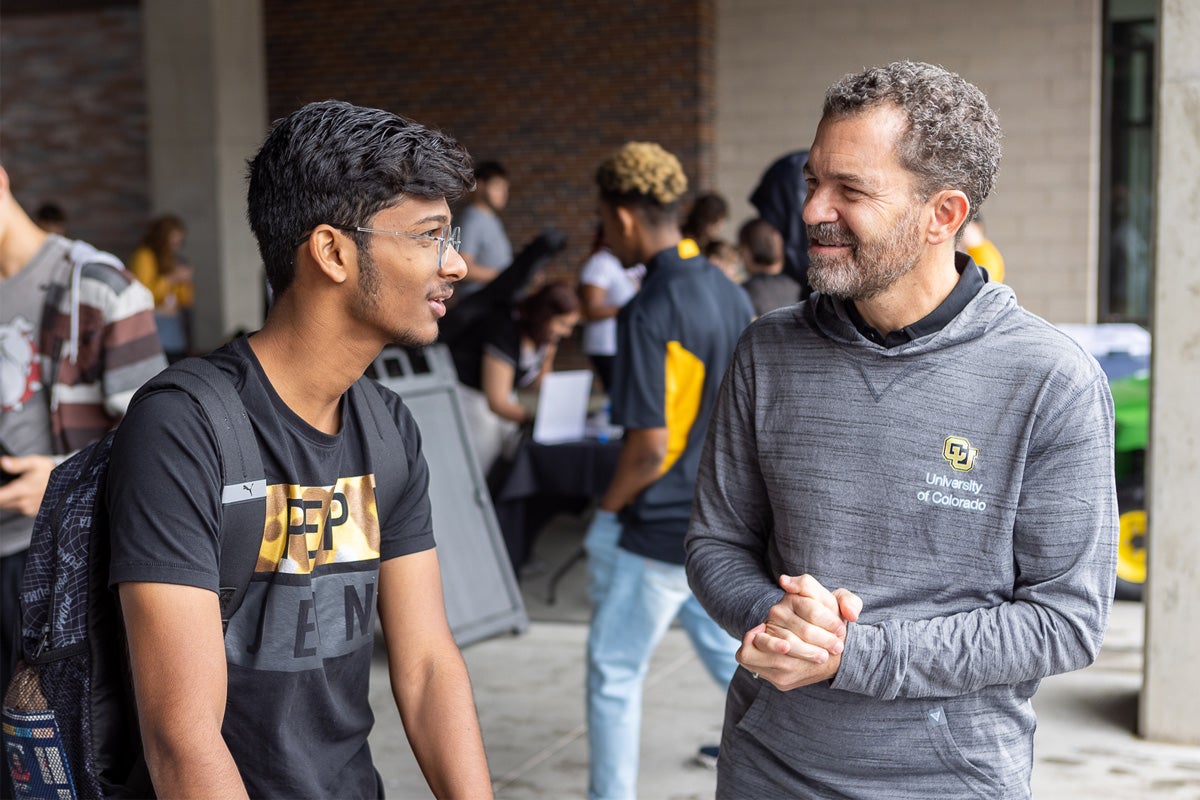
I love this time of year! Tens of thousands of students are converging on our four campuses for the start of the fall semester. As they settle in and begin their classes, students will be seeking new connections and building on existing ones. These relationships are vital parts of the college experience – and the human experience.
Each of us finds connections in different areas of our lives: in our family, our social circle, work, house of worship or sports, among others. But sometimes, particularly when we’re new to a place, we need a little help. I want every student at the University of Colorado to find the connections that allow them to build a community in which they feel a strong sense of belonging. While creating meaningful relationships is a wholly personal experience, we work hard at CU to help provide students with essential opportunities to link with others on their journeys.
For instance, at CU Boulder, we offer amazing Living Learning Communities (LLCs). These communities allow smaller cohorts of undergraduates to live and learn together around a shared interest or experience. There are LLCs focused on engineering, business, music and health and wellness, to name just a handful, as well as a Transfer LLC that centers around the transfer student experience for the many students who come to CU from other institutions. The wonderful Center for African and African American Studies (the CAAAS) is focused on the history, cultures and arts of Black communities. With three major program areas – research, visual and performing arts and student services – the CAAAS provides undergraduates, graduate students, faculty, staff and others a unique blend of academic offerings, co-curricular activities and community-building.
CU Denver’s City Heights Residence Hall offers an attainable housing option in the heart of downtown Denver while also providing undergraduates with academic enrichment and social opportunities they find incredibly rewarding. The facility’s Learning Commons is a key feature, which offers student and faculty resources like peer-to-peer tutoring, teaching development workshops and cross-collaborative learning spaces. Another excellent program is the First-Generation and Multicultural Business Program (FaM) in the Business School, which increases support for and resources to CU Denver students who identify as first-generation or multicultural or both. FaM provides peer and career/alumni mentorship and offers scholarships, year-round programming and internships to help students successfully navigate their educational journeys and future careers.
CU has a longstanding and strong commitment to our veteran and military-affiliated students with robust programming and resources systemwide. At UCCS, where one in five students are military-affiliated, Veteran and Military Affairs offer transition assistance, academic support and social opportunities to students who are veterans, active duty, National Guard and reservists, as well as military family members. The campus’ Multicultural Office for Student Access, Inclusiveness and Community (MOSAIC) and LGBTQ+ Resource Center provides student-advocated support services, programming, trainings and workshops, leadership development and active advising as it works to create an inclusive and equitable space for all Mountain Lions.
I’m also proud of the work on our CU Anschutz Medical Campus, where first-generation medical students can turn to the FirstUp Program for invaluable guidance and support from mentors who are alumni, faculty and medical leaders in the community. The steps to becoming a doctor can be complex, and FirstUp mentors help students prepare for board exams and apply for residency.
We recognize that the number of “non-traditional” students at CU – those who don’t come to us straight after graduating from high school – is growing. We’re serving thousands of students who have earned some college credits but no degree, and more adult and non-traditional learners than ever before. Students like Lee, a Pueblo native who worked for many years in the Colorado Department of Corrections and then found himself at a crossroads. He changed his trajectory by enrolling at UCCS, and found a welcoming, supportive community that has allowed him to transform his life. Learn more about his story – it's truly inspiring.
As we gear up for a new academic year, it’s inspiring to take stock of the outstanding work happening on our campuses – and I’ve highlighted only a few examples. With students, faculty and staff from virtually every corner of the state, nation and world on our four campuses, there are rich environments for everyone to make connections and find their place. I’m so proud of our efforts to ensure all members of the university community feel supported, able to succeed and at home at CU – and this work is ongoing.